How are Turkeys Raised?
Turkey farmers in Alberta take great pride in raising turkeys to provide safe, high-quality food for Canadian consumers. They work diligently to ensure the humane treatment and care of every bird.
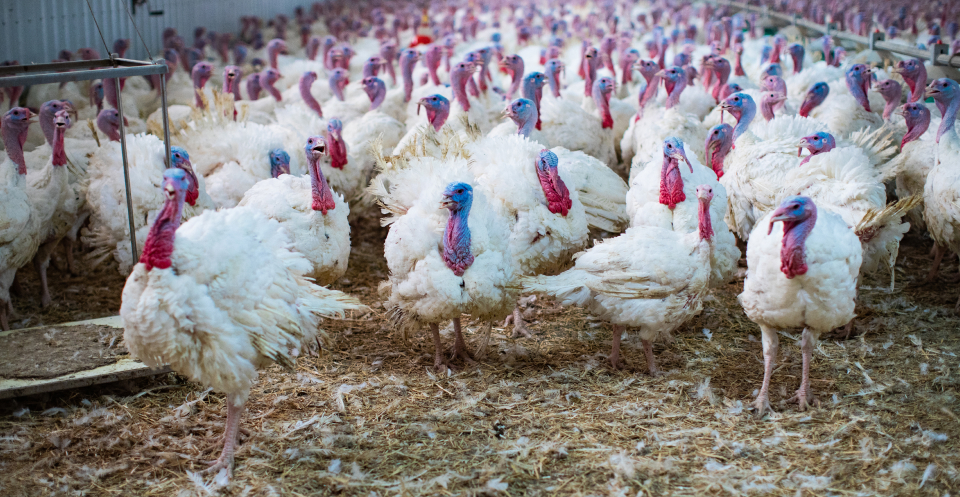
From the moment day-old turkeys, called poults, arrive from the hatchery, they receive careful attention. They are placed in climate-controlled barns where they are kept warm and comfortable. This first stage of life, called brooding, lasts until the birds are approximately five to six weeks old. During this time, turkeys are not kept in cages and are free to move around on soft, dry bedding.
The next stage, known as the growing cycle, continues until the turkeys reach their desired market weight, which can range from 10 to 17 weeks depending on their intended use. Hens (females) are generally raised for the whole-bird market that Canadians are most familiar with, while toms (males) are often grown for products such as ground turkey, sausage, deli slices, and more — though some are also sold as whole birds.
On-Farm Food Safety
Turkey farmers across Canada have implemented the Turkey Farmers of Canada On-Farm Food Safety Program© (OFFSP), which details specific steps to reduce and control potential food-safety hazards on-farm. The program is mandatory for all licensed producers in Alberta. The program outlines extensive biosecurity measures, including restricting access of people and animals into barns, disinfecting equipment and taking proper barn management and hygiene precautions; all aimed at keeping birds healthy. By implementing this program, turkey farmers are doing everything they can to raise turkeys of the highest quality.
Flock Care
The Turkey Farmers of Canada (TFC) Flock Care Program© is a mandatory and third party audited national program that provides turkey farmers with measures to ensure the proper handling and care of their birds. Based on the Canadian Recommended Code of Practice, as well as other internationally accepted programs and standards, the TFC Flock Care Program requires detailed on-farm record-keeping and documentation and complements the flock care-related measures covered by the TFC OFFSP©.
Antibiotics
Turkeys, like any other living creatures, can sometimes become sick. Medication, approved by Health Canada, is given only when necessary to prevent and treat infections, and is given on-farm under the supervision of a veterinarian. If medication must be used to care for sick birds, a withdrawal period is required before any bird can leave the farm.
The farmer is responsible for keeping records of medication used from the first day, until the last day, of use. He or she must also sign a record stating that the correct withdrawal time has taken place.
Through poultry meat inspection programs, the CFIA monitors and tests for a variety of contaminants, including veterinary medications, to help ensure that consumers receive a safe, wholesome product.
Growing Turkeys
Turkeys are fed nutritionally balanced diets of mixed grains and oilseeds, which typically include corn, soya, wheat, barley and canola, for healthy growth and development. There may be a very small percentage of animal by-products included as a source of protein and energy since turkeys, by nature, are omnivores.
Feed is often adjusted to match the growth stages of the birds. Young turkeys (poults) are fed a ‘starter’ mixture. As they grow, the feed is changed to meet nutritional requirements. Each type of feed includes the proper balance of protein, energy, fibre, fat and other elements such as calcium, phosphorus, magnesium and vitamins.
Turkeys have free access to feed 24 hours a day, which means they can help themselves to food or water at any time.
In Canada, turkeys are NOT given hormones or steroids. These have been prohibited for over 50 years. It is scientific advancements such as selective breeding, better feed formulation and modern management practices that are responsible for the larger, healthier turkeys produced today.